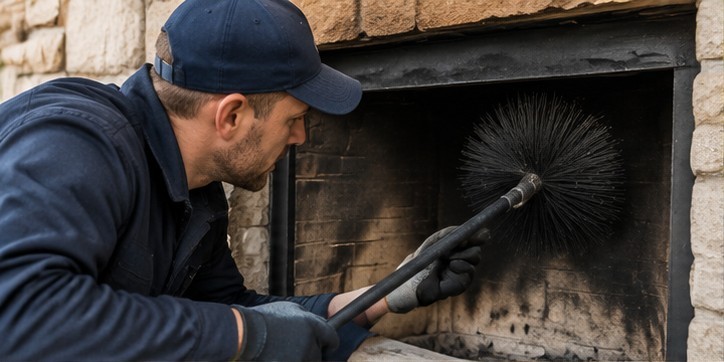
Chimney Sweep
We sweep, camera-inspect and repair — clean and safe.
Get a free estimate →Illustrative image (AI-generated).
We sweep, camera-inspect and repair — clean and safe. Contact Chimney Aid for service availability.
 Chimney service
Reference imagery from existing chimney design assets; not a verified Chimney Aid crew.
Chimney sweep, cleaning, inspection and repair — explore the existing service catalog in the menu.
We sweep, camera-inspect and repair — clean and safe.
Get a free estimate →Illustrative image (AI-generated).
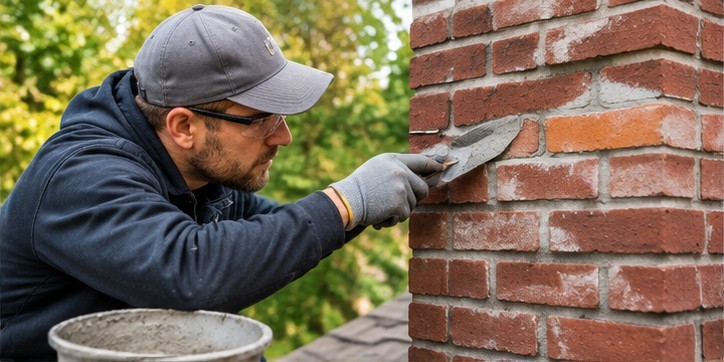
Mortar & brickwork.
Get a free estimate →Illustrative image (AI-generated).
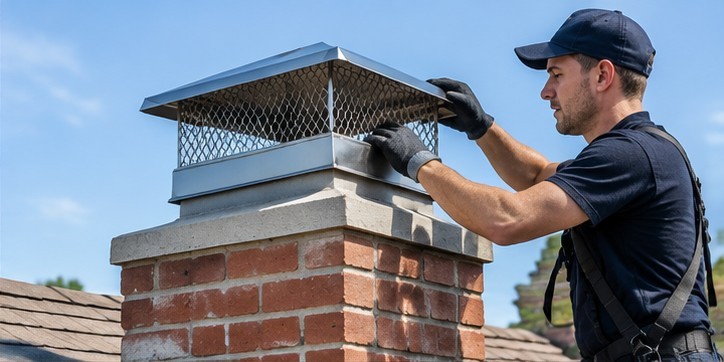
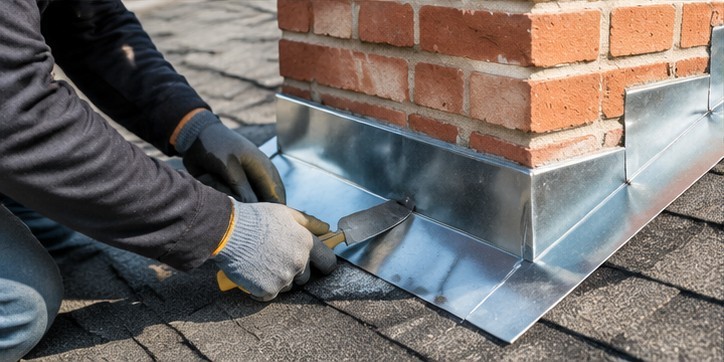
Water in a firebox after rain can enter at the cap, crown, or flashing.
Get a free estimate →Illustrative image (AI-generated).
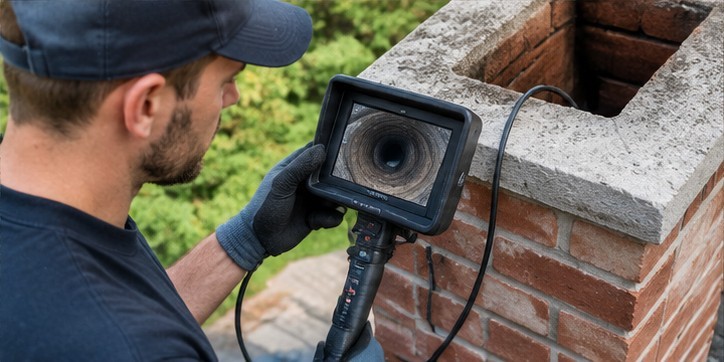
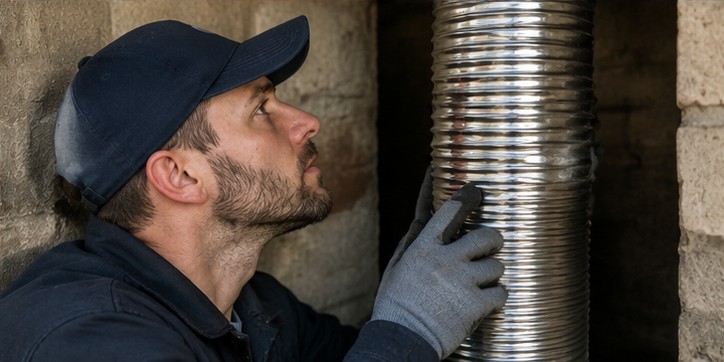
For a home in Houston, Texas, the chimney is easy to forget all summer and impossible to ignore the first cold evening, and the work described here is what the season asks of it. The flue inside a Houston, Texas chimney is a passage, and like any passage it works only as well as its condition allows - clear, intact, and drawing the way it was built to draw. Draft is the chimney's quiet measure in Houston, Texas - when the draw is right, smoke rises and the room stays clear; when it is wrong, the room is the first to know.
Nothing about a chimney in Houston, Texas needs guessing: its condition can be seen, measured, and described, and that description is where every visit starts. A chimney in Houston, Texas does two jobs at once: it lets a fire warm the room while carrying smoke and exhaust gases safely up and out of the home. Every fire lit in Houston, Texas leaves something behind in the flue, and what it leaves - soot first, creosote as it builds - is the reason sweeping exists.
An inspection in Houston, Texas reads that whole system before anyone decides what it needs, because a symptom at the fireplace often starts at a part far above it. This page gathers the chimney topics that matter for Houston, Texas - sweeping, inspection, and repair - organized from the hearth upward so each part gets its due. Homeowners in Houston, Texas usually think about their chimney when the weather turns, when smoke behaves oddly, or when a burning smell lingers longer than it should.
A chimney in Houston, Texas is also part of the roofline: the cap, the crown, and the flashing at its base are the weather line where the stack meets the roof.
For Houston, Texas, the underlying record is a list row, not an estimate: the city, the state, and the ZIP set are exactly the values the approved list carries. Because the list is the source, the ZIP codes named for Houston on this page - 77069, 77070, 77071, 77072, 77073, and 77074 - are the approved codes and no others are implied. Within Texas, the list covers 274 cities and 736 ZIP-code entries, and Houston appears in it with its own full set of ZIP codes.
Counting only the ZIP rows, Texas contributes 736 entries to the list, and the Houston rows form a small but complete slice of that total. The Texas list also reaches Lewisville, Liberty Hill, and Lillian, so the service pattern around Houston is part of a much wider state list. A reader comparing entries will notice that Houston has 97 ZIP codes on the list while some smaller Texas towns carry only one.
The list treats Houston as one entry among 274 in Texas, with 97 ZIP rows attached to the city name. ZIP codes recorded for Houston include 77069, 77070, 77071, 77072, 77073, and 77074, and each of those codes identifies a distinct part of the city on the list. Each ZIP row under Houston on the list, including the row for the city row, points back to the same city entry and the same set of services described on this page.
Other Texas communities on the same list include Lewisville, Liberty Hill, and Lillian, each with its own city and ZIP pages built from the same source data. The list gives Houston a stable identity - city, state, and ZIP list - and this page is built entirely from that identity plus the approved service material. The service list for Houston records 97 ZIP codes, and Houston, Texas is one of the entries carried for the city.
Every sweep comes with a full check, as described in the archived Chimney Aid design.
Call (888) 248-0311Creosote in a Houston, Texas flue builds in stages - a flaky, brushable layer first, and a harder, tarry glaze when fires burn low and slow - and the stage found decides how the cleaning proceeds. Sweeping in Houston, Texas also clears the cap: a cap screen matted with creosote and debris chokes the draw at the very top, and it is brushed clear as part of the work. Sweeping in Houston, Texas centres on the flue: brushes sized to the flue's shape and size travel its full length, loosening soot and creosote so they can be removed rather than redistributed.
The smoke test after cleaning in Houston, Texas closes the loop: a fire is lit or smoke is introduced, and the draw is watched to confirm the chimney carries it away the way it should. A sweep in Houston, Texas covers more than the flue itself: the smoke chamber above the damper and the firebox below it collect their own deposits, and both are cleaned as part of the same visit. For homes in Houston, Texas where the chimney serves more than one flue, each flue is swept and reported on its own record, not averaged into one.
A flue in Houston, Texas serving a wood stove insert is swept on the same principle, with the connection at the stove checked as part of the visit. Cleaning in Houston, Texas is the natural partner of inspection, because the condition of the liner and joints means the most when the surfaces are clean enough to see. Brushes and rods in Houston, Texas are matched to the flue - clay tile, metal, and masonry flues each take their own tools - because the wrong brush trades a dirty flue for a damaged one.
A chimney in Houston, Texas that is swept before the burning season starts the season with a clear passage, instead of asking the first fires to push past a year's deposits. The work in Houston, Texas ends with the hearth area left clean and the homeowner told plainly what came out of the chimney and what its condition says. How much a Houston, Texas flue has built up depends on use - nightly fires, occasional weekends, and the wood burned all leave different amounts behind - and the sweep reports what was actually found.
The damper in a Houston, Texas chimney sits at the top of the firebox, and sweeping clears the shelf behind it where soot and debris settle out of the airstream. Season timing matters in Houston, Texas: a sweep booked before the heavy burning months means the chimney starts the season clear rather than catching up to it.

The repair in Houston, Texas ends with the chimney tested in operation - the draw checked and, where the work calls for it, a smoke test - so the fix is proven rather than assumed. Smoke chamber repair in Houston, Texas smooths and seals the funnel above the damper so smoke transitions into the flue instead of eddying and spilling at the opening. Repair in Houston, Texas does not mean rebuilding by default; most visits resolve into one named part - a damper, a cap, a crown, a run of joints - restored to working order.
Water in a Houston, Texas firebox after rain usually enters at the top - cap, crown, or flashing - and the repair follows the water's path rather than treating the puddle. A damper in a Houston, Texas home that no longer seals - warped, rusted, or stuck - lets heated room air escape up the flue all winter, and replacing or repairing it restores the seal. Where masonry in Houston, Texas has failed beyond joint repair, the affected section is rebuilt course by course, and the scope is described in those terms before any commitment is made.
Flue liner defects in Houston, Texas - cracked tiles, gaps at the joints, spalling surfaces - are found by camera, and the repair options are described from what the camera actually shows. Repair in Houston, Texas begins with identifying the part at fault, because smoke in the room, water in the firebox, and a weak draw can each trace to a different part of the chimney. A chimney in Houston, Texas that leans or shows stepped cracks through the bricks is showing a structural picture, and the conversation turns honestly to rebuilding the failed section.
A cap in Houston, Texas keeps rain, birds, and debris out of the flue, and a missing or damaged cap is one of the simplest defects to name and to put right. Flashing in Houston, Texas seals the joint where the chimney meets the roof, and a leak at that joint is traced and resealed rather than blamed on the roof or the chimney by guess. In Houston, Texas, a repair visit records what was found with enough specificity that the homeowner can decide between repair now and monitoring the part.
The crown at the top of a Houston, Texas chimney sheds water off the stack; a cracked crown lets water into the masonry, and crown repair seals the top before the damage travels down. White staining on the outside of a Houston, Texas chimney is water moving through the masonry and carrying salts with it, and the repair addresses the entry point, not just the stain.
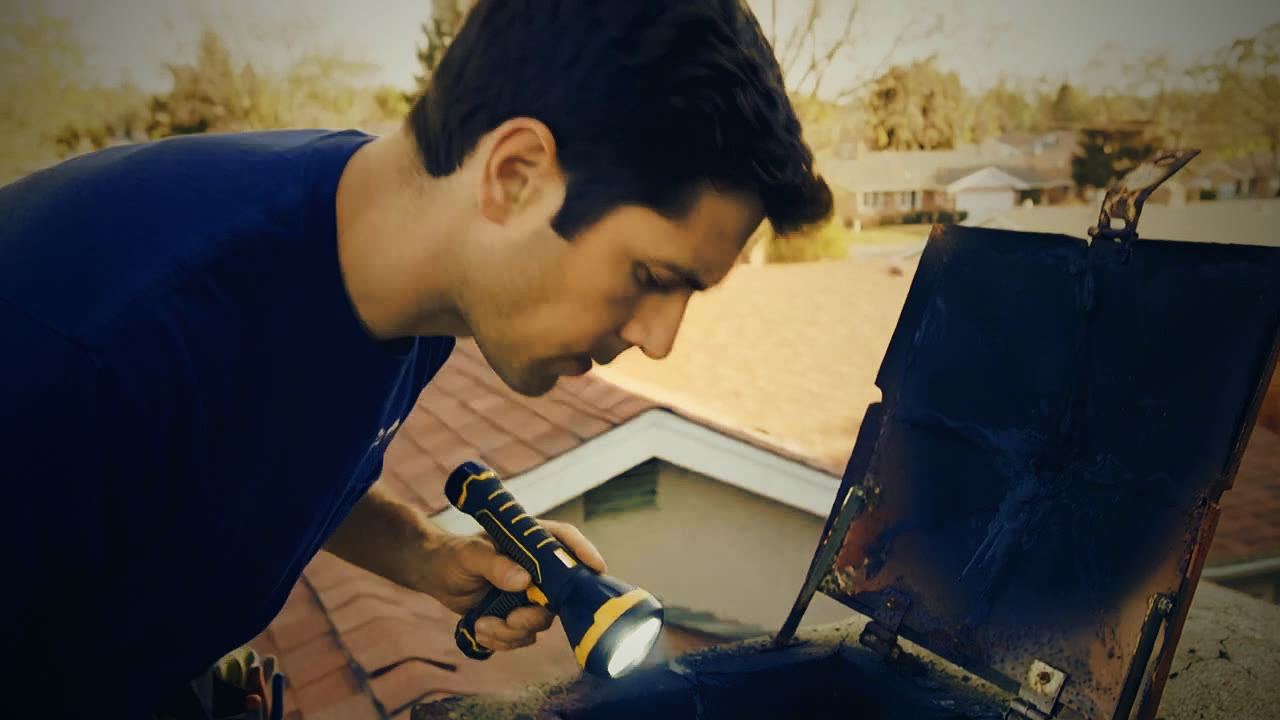
Watch: from arrival to a clean flue.
The sweep in Houston, Texas follows the inspection, so the cleaning is done with knowledge of the flue's condition rather than in ignorance of it. When both sweeping and repair are needed in Houston, Texas, the inspection and cleaning usually come first so the repair assessment is made on a chimney that can be seen clearly. Work in Houston, Texas is scoped to the chimney system itself - the firebox, damper, smoke chamber, flue, liner, and the cap, crown, and flashing at the top.
Findings in Houston, Texas are described in plain terms at the time they are found, not translated into jargon at the end of the visit. The visit in Houston, Texas ends with the damper left in the position agreed and the homeowner told what to watch for in the first fires that follow. A visit in Houston, Texas starts with questions: what the homeowner has noticed, when the smoke behaviour changed, and how the fireplace has been used season to season.
Photographs from the camera inspection in Houston, Texas help the conversation, because a cracked flue tile or a gap at a joint is easier to discuss when it can be seen. In Houston, Texas, the inspection comes before the work: the firebox, damper, and smoke chamber are looked at directly, and the flue is examined by camera where the eye cannot reach. Cleaning and inspection in Houston, Texas inform each other: the flue is read before service and again after, when its surfaces can be judged fairly.
During a visit in Houston, Texas, the hearth and the room around it are protected before tools come out, and the work area is left clean when the work is done. If repair is needed in Houston, Texas, the specific part, its condition, and the proposed work are identified before any commitment is made.
A strong campfire smell in a Houston, Texas home on humid days, with no fire lit, usually means deposits in the flue are breathing back down into the house. Animals or birds heard in a Houston, Texas chimney - scratching, chirping, fluttering - mean the cap has failed at its simplest job, and nesting material in a flue is a blockage as well as a nuisance. A fire in Houston, Texas that has become hard to light, or that burns lazily despite dry wood, is often describing a restricted flue rather than a fuel problem.
Smoke stains on the underside of the cap or a cap screen dark with glaze in Houston, Texas show creosote reaching the very top of the system. Pieces of clay tile in the firebox of a Houston, Texas home come from only one place - the flue liner above - and they are a sign to have the liner looked at before the next fire. Black staining on the wall or ceiling above the fireplace opening in Houston, Texas records smoke spilling where it should not, fire after fire.
A damper in Houston, Texas that will not open fully, will not close, or rains rust flakes when it moves is naming its own condition. Water in the firebox or rust streaks on the damper of a Houston, Texas home point to the top of the chimney first: cap, crown, or flashing letting the weather in. White, chalky staining spreading across the brickwork of a Houston, Texas chimney means water is travelling through the masonry and leaving salts behind.
Crumbling mortar you can rake out of the joints of a Houston, Texas chimney with a fingertip is a joint that has stopped protecting the stack. Smoke entering the room in Houston, Texas when a fire is lit is the clearest sign the draw is wrong - from buildup, a blockage, or a flue problem the inspection separates.
Between visits, a homeowner in Houston, Texas can keep the ash bed sensible: a shallow layer insulates the firebox floor, while ash built to the grate belongs in a metal container outdoors. The cap on a Houston, Texas chimney deserves an occasional look from the ground: a cap that has shifted, tilted, or vanished is visible long before its absence causes trouble. Maintenance in Houston, Texas is mostly observation - the chimney announces most of its needs early, to an owner who knows the signs.
A written note of what was found at each visit gives a Houston, Texas household a history, and histories make later decisions easier. Burning dry, seasoned wood in Houston, Texas is the single habit that slows creosote most - wet wood burns cooler and smokier, and the flue collects the difference. A chimney in Houston, Texas that sits unused for a long stretch still deserves a periodic look, because caps fail, animals move in, and mortar ages whether or not fires are lit.
The crown and the top joints of a Houston, Texas chimney are worth a look whenever other roof work is done, because the top of the stack weathers faster than any other part. Homeowners in Houston, Texas who notice a change after a storm - a shifted cap, debris at the base of the stack, a new leak stain - are seeing the most common maintenance trigger there is. Keeping the area in front of the hearth in Houston, Texas clear and the screen or doors in working order is the homeowner's part of fire care between visits.
In Houston, Texas, the damper should be closed when the fireplace is idle through the warm months, which keeps conditioned air, odours, and visitors from travelling the flue. Keeping trees trimmed back from the stack in Houston, Texas reduces the debris load on the cap and the moisture held against the masonry.
We are a 5-star review company.
The sweep was thorough, and the camera inspection found a cracked liner we did not know about. Everything was explained clearly before any work was done.
Our chimney was smoking into the room. They cleaned the flue, checked the cap and crown, and the fireplace draws perfectly now.
Fast scheduling, the technician arrived on time, and the hearth was left cleaner than he found it. Highly recommended.
The list entry for Houston, Texas says nothing about an individual chimney; planning starts from the actual stack at the actual home. Keeping records for a Houston, Texas chimney - visit dates, findings, work done - turns each future visit into a comparison instead of a fresh guess. Budget conversations in Houston, Texas stay grounded when they are tied to named parts and named conditions rather than general impressions.
Owners in Houston, Texas who burn nightly plan differently from occasional users, and saying so shapes sensible recommendations. Access is worth thinking about in Houston, Texas: the hearth and the room around it, the roof, and the state of the stack where the work will happen. Planning chimney work in Houston, Texas starts with deciding whether the need is cleaning, repair, or information - and an inspection answers that honestly.
Questions prepared in advance - what was found, what it affects, what happens if it waits - make a Houston, Texas visit more useful. Timing work in Houston, Texas before the heavy burning season avoids the rush and lets any larger job be scheduled calmly. A larger repair in Houston, Texas, like liner work or a partial rebuild, is planned from the camera record, so the scope describes the flue as it is rather than as it is guessed to be.
If a chimney in Houston, Texas is part of a home sale, its documented condition becomes part of the transaction, and a clear report serves both sides.
No service in Houston, Texas is a substitute for another, and a well-run visit says plainly when only one of them is needed. The order of operations in Houston, Texas is deliberate: inspect, sweep, look again by camera, and only then define repair on a chimney whose condition can actually be seen. Chimney Cap Installation in Houston, Texas deals with its own part of the system, while Chimney Cap Repair deals with another, and confusing the two leads to the wrong scope.
A chimney in Houston, Texas may need only a sweep in one year and a defined repair in another, and the inspection is what separates the two. Sweeping and repair in Houston, Texas answer different questions: sweeping asks what has accumulated, repair asks what has worn, cracked, or stopped doing its job. A homeowner in Houston, Texas choosing between services can start from the symptom - smoke and smell suggest the flue and its deposits, while water and crumbling joints suggest the masonry and the top.
All of the services in Houston, Texas are described on this page because they are recorded for the city in the same list entry. Caps, crowns, flashing, and liners in Houston, Texas each belong to their own service entries, because each part fails in its own way and is put right in its own way.
In Houston, Texas, people ask whether creosote can be burned off with a hot fire, and the honest answer is no - heat is what makes heavy deposits dangerous, and removal is a mechanical job. A common question in Houston, Texas is whether a cap is really necessary, and the answer is what the cap keeps out: rain that rusts and rots, animals that nest, and debris that blocks. In Houston, Texas, the difference between a sweep and an inspection is a fair question: sweeping removes deposits, inspection evaluates condition, and the two are usually combined in one visit.
Homeowners in Houston, Texas often ask how often a chimney should be swept, and the honest answer depends on how much wood is burned and how the flue has been building up between visits. Another question in Houston, Texas concerns cost, and the standing answer is that free estimates are offered so the scope is described from findings, not from a phone guess. Another question in Houston, Texas is whether the fireplace can be used before a known defect is repaired, and the answer depends on which part is defective - a cap and a cracked liner are very different cases.
Owners in Houston, Texas ask why smoke comes into the room only on windy days, which usually points to the top of the stack - its height, its cap, and the air moving over it. People in Houston, Texas ask what a camera inspection shows that a look from below cannot, and the answer is the flue's whole length: its joints, its liner surface, and the deposits clinging where no eye reaches.
Check availability for your city or ZIP code.
Select your ZIP code for your local Houston page.
Nothing on this page for Houston, Texas goes beyond the approved list and the approved service material, and that restraint is deliberate. Other Texas readers will find the same structure on the pages for Lewisville, Liberty Hill, and Lillian, with their own local facts in place of the ones given here. To ask about an appointment in Houston, Texas, call (888) 248-0311 and describe what you have noticed; that description is where every good visit starts.
A chimney in Houston, Texas that is inspected, swept, and repaired on evidence rather than habit will draw the way it was built to, season after season. The local facts on this page - Houston, Texas, and ZIP codes 77069, 77070, 77071, 77072, 77073, and 77074 - are stated exactly as recorded. In Houston, Texas, we are a 5-star review company, and the way we keep that standing is by describing findings honestly and doing the work described.
Chimney Cap Installation in Houston, Texas covers its own part of the chimney system, checked against the condition found on the visit and described in plain terms before any work is scheduled.
Chimney Sweep is the right topic in Houston, Texas when deposits have built up in the flue - the sweep clears soot and creosote from the firebox to the cap and finishes with a smoke test so the draw is proven.
Call (888) 248-0311 and describe what you have noticed with your chimney in Houston, Texas - smoke behaviour, odours, staining, water in the firebox, or a part that has stopped working.
The approved list records 97 ZIP codes for Houston, including 77084, 77085, 77086, 77087, 77088, and 77089.
Yes, free estimates are offered before any work is scheduled.
Yes, the inspection is free, and its findings are described in plain terms before any work is decided.

Tell us about your chimney service request using the estimate form. This is a design preview.